 Dolphy Docs
From message to answer and action
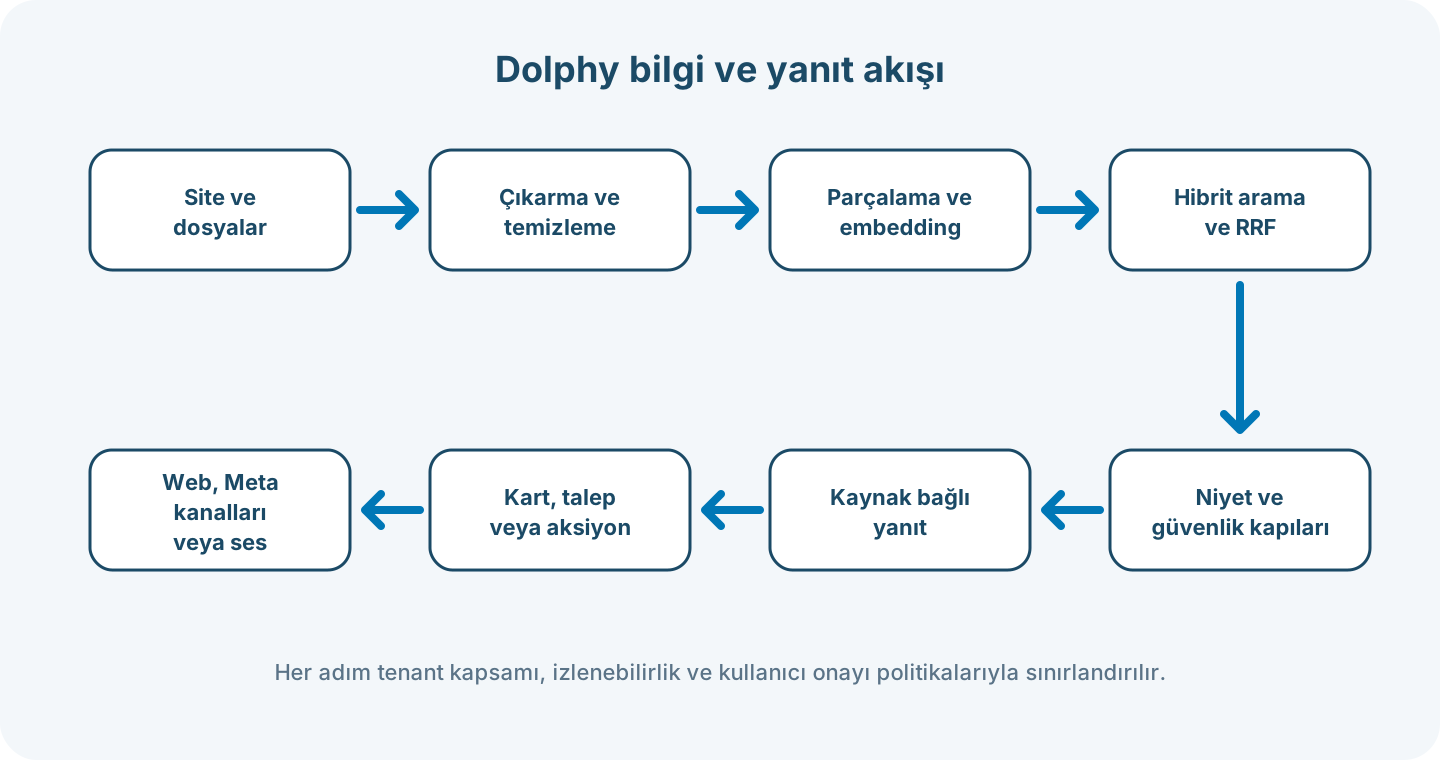
The Dolphy loop starts with a message and ends with an observable outcome. A message from the web widget or a connected channel is validated, assigned to the correct business workspace and added to the conversation history.
1. Understand the message
The agent considers the language, the user's intent and the conversation context. A factual question, a request to leave contact details and an operation in an external system do not follow the same path. This classification influences which knowledge topics are searched and which tools can be offered.
2. Find evidence
The question is searched by both semantic similarity and word matching. The rankings are combined with Reciprocal Rank Fusion; duplicate content is removed and source diversity prevents one long page from occupying the entire context.
3. Compose the answer
Selected passages become evidence for the answer engine. It should not invent prices, policies or availability absent from the knowledge base. If evidence is insufficient, the agent can ask a clarifying question, collect contact details or hand the conversation to the team.
4. Deliver the result
The result may be plain text, a product card, a request form or a webhook action. Channel capabilities differ: web can display richer components, messaging channels adapt the same result to supported formats, and voice favours a concise spoken response.
This combines conventional RAG with an agent layer that can use tools. The Agentic RAG survey discusses broader versions of this pattern involving planning, tool use and feedback.